
Brothers
by Brennan O'Donnell

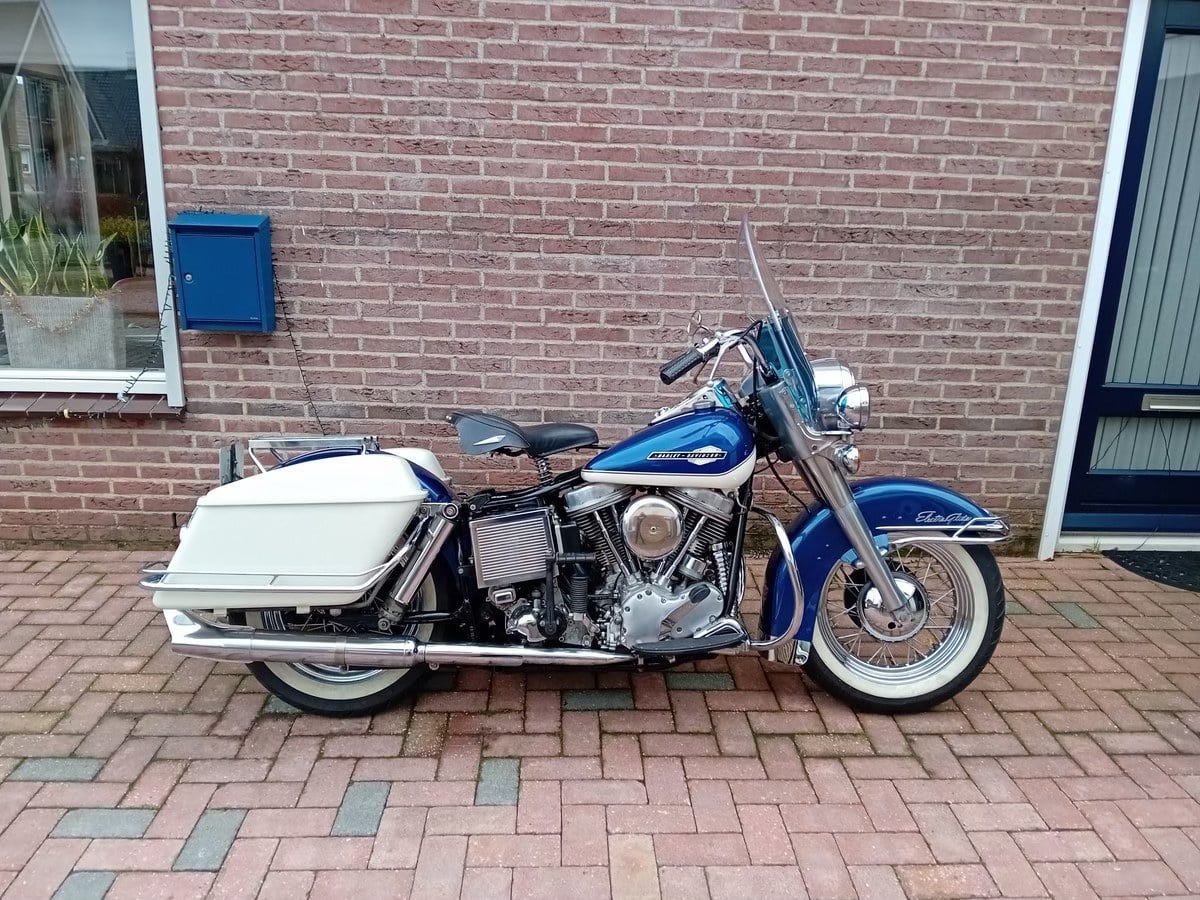
Brothers
I.

The Osbornes disappeared that fall. One day
We noticed that the Harley wasn’t there.
When school began, I heard a teacher say
That Donny’s mom had taken him somewhere

Away from all the memories. No one knew
Where Donny’s dad had gone. They said he’d lost
His job. They said that Mrs. Osborne threw
Him out, that she believed the awful cost

Of Jeffy’s death was mostly his to bear.
Others said they’d left together, that through
The pain and blame they’d found a way to share
Their grief.  We never knew which was the truth.

II.

When Jeffy Osborne died, they took our first
Grade to the wake.  They pushed us up to see
Him: white suit, bow-tie; rosary draping his wrists—
Prepared for first communion as we’d been

Just weeks before.  His dad sat crying hard.
His son had fallen from his motorbike—
A Harley Hi-Fi Blue Electra-Glide
That all of us had envied, nothing like

Our fathers’ Fairlanes, Ramblers, and Dodge Darts.
His mother cradled Donny, Jeffy’s twin.
Her eyes were empty as they sat apart.
We waited for the Vigil to begin.

I hated Don: he was a raging bully,
As cruel a boy as Jeff was sweet and kind.
We marveled how such lookalikes could truly
Be so unlike in temperament and mind.

In nomine Patris—our mothers told
Their beads. Our fathers looked askance, as dumb
And meek as mules, as if they bore a load
That ground them down to dust and left them numb.

Et filii—I stared through narrowed eyes at Don
Despising him for being there. Eyes red,
He curled up in his mother’s lap—his tie undone,
His shirt untucked, as “hush, my love” she said.

O Mater misericordiae.  The prayers
Went on.  I trembled by my mother’s side.
I couldn’t help but think it wasn’t fair—
That somehow God had let the wrong twin die,

That He had looked the other way when Jeff
Went spilling off the back of that machine,
His guardian angel leaving him bereft
As helmetless (they said) he fell unseen.

As much as I was sad for Jeff—his chill
And rigid body in the box—the bruise
Still purple on his skull, for all the skill
And pancake makeup Mr. Kane had used—

I somehow envied him as well.  He lay
There, precious, pure, and seeming more complete
Than all we first communicants could be.
Nunc et in hora mortis nostrae,

Our pastor prayed: he’s safe and free from harm.
Then sheep-like we all left them one by one:
Jeffy in the box; his dad undone,
And Donny sleeping in his mother’s arms.

 III.

For years I’d wake from a recurring dream.
We’re in our first-grade room; Jeff is alive.
And Donny’s there—but somehow changed. He seems
Almost to hover over us, his eyes

Benign, attentive, wiser than his years
Yet still a sharp-eyed little boy no older
Than his peers. I greet him without fear,
His hand a gentle pressure on my shoulder.

Miss Hughes, our cheerful teacher, has set up
In front the easel with its giant calendar
With “April” in black marker at the top,
 In red the numbered days gone by so far,

The days to come still blank. Above, the clock:
Its black hands on a face of black and white
At twelve and nine.   Beneath, a pinewood box
The size of a first-grader. We’re not frightened.

We take for granted how it is—that any
Day could be the day when one of us
Is made to mark the date in red, and then
Lie down for good.  We all look to Miss Hughes.

At this point in the dream, the light begins to fade.
Miss Hughes performs some sort of divination.
The marker finds its way to Jeffy’s hand.
He looks around the room in resignation

And stands beside the easel poised to write
The date—the sixteenth—in the empty square,
When Donny, flashing through the dying light
Removes the pen from Jeffy’s grasp. With care

He strokes and kisses his twin brother’s face—
Then steps into the box and takes his place
Brennan O’Donnell is recently retired after 35 years as a professor and administrator at Loyola University Maryland, Fordham University, and Manhattan University. During his time in the classroom, he regularly assigned long poems, much to some students’ chagrin. Among his publications are two studies of the poetry of William Wordsworth: Numerous Verse: A Guide to the Stanzas and Metrical Structures of Wordsworth's Poetry (Studies in Philology Texts and Studies) and The Passion of Meter: A Study of Wordsworth’s Metrical Art (Kent State University Press). He is the 2014 recipient of the Robert Fitzgerald Prosody Award, presented by the Westchester Poetry Conference to “scholars who have made a lasting contribution to the art and science of versification.”
Note from the Poet
As the poem’s recurrent dream suggests, the story of these brothers and their family has haunted me since the wake described in the poem. I’m grateful for the space to work out some of the meaning of that haunting. Many thanks to Mary Finnegan for her encouragement and advice.